Introduction to early fire detection
Early fire detection is crucial to minimize human, economic and environmental losses. Today, technology has advanced significantly, enabling more efficient systems that identify risks before they become tragedies.
In this article, we explore the most advanced technologies for early fire detection, their applications in different sectors and how to implement them effectively.
Table of Contents
What is early fire detection?
Early fire detection refers to the ability to identify signs of fire in its early stages, even before there are visible flames. To achieve this, sensors, thermal cameras, artificial intelligence and advanced monitoring systems are used.
The main benefits of an early detection system include:
- Reduction of material and human losses.
- Less response time for firefighters.
- Fire prevention in industrial and natural environments.

Technologies used in early fire detection
There are several technologies that allow early detection of fires. The following is an analysis of the most commonly used ones:
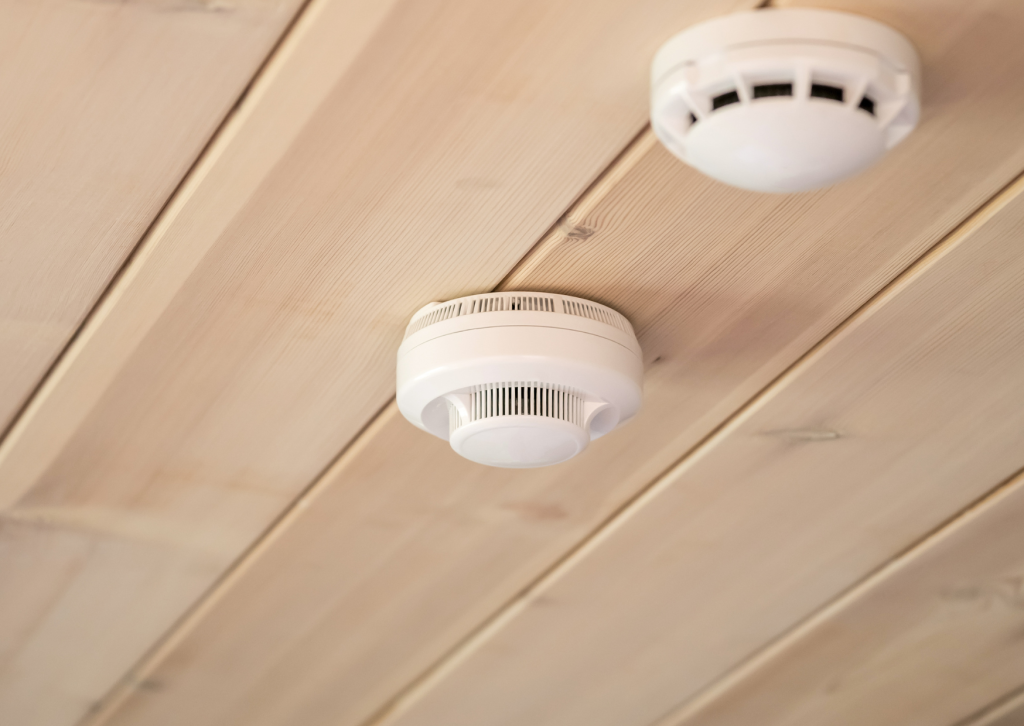
Smoke and gas sensors
The sensors detect combustion particles in the air and can be classified into:
- Optical (photoelectric) detectors: Detect smoke by means of a beam of light.
- Ionic detectors: Use a small amount of radioactive material to detect combustion particles.
- Aspiration systems: They draw air from the environment and analyze it for suspicious particles.
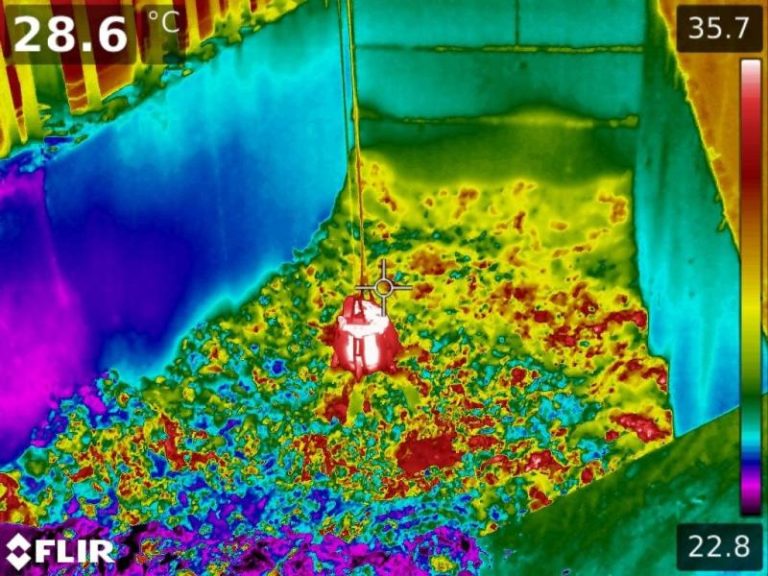
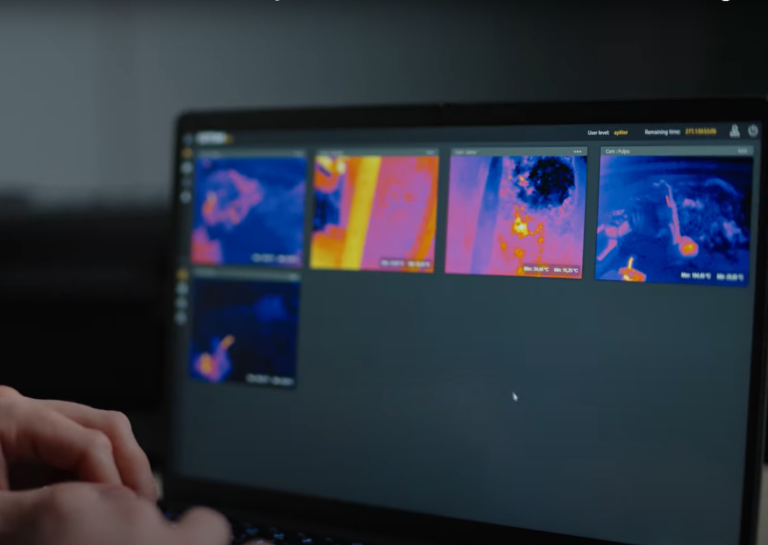
Thermal cameras
Infrared cameras detect changes in temperature, making it possible to identify areas of abnormal heat before the fire spreads. They are ideal for:
- Industry and recycling plants.
- Forests and natural areas.
- Critical infrastructures (warehouses, airports, power plants, etc.).
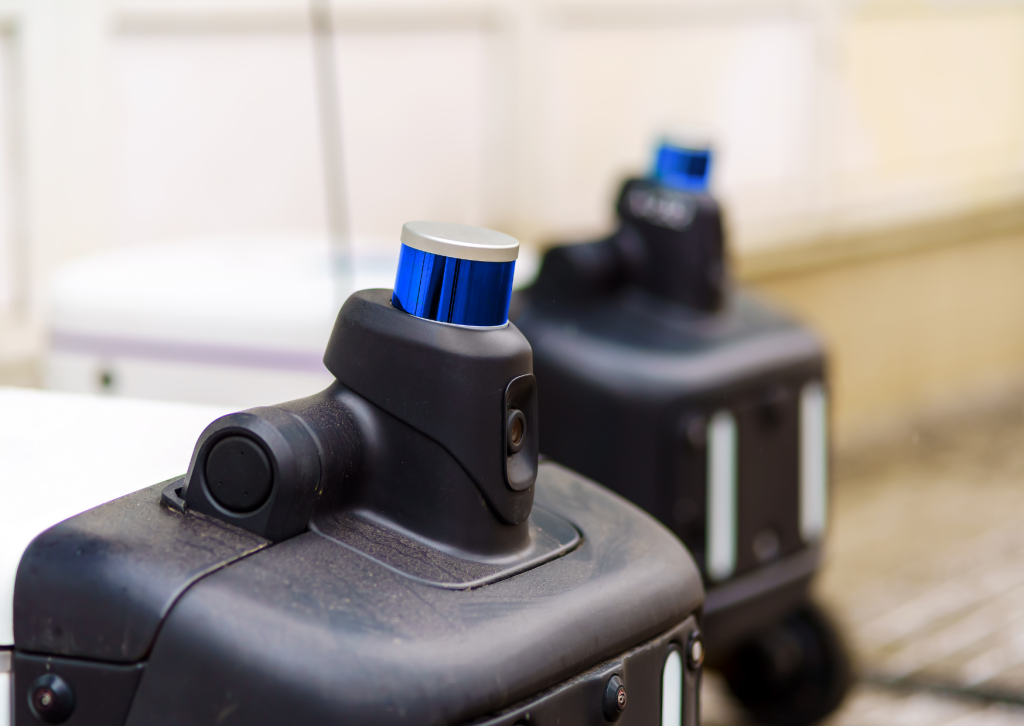
LIDAR and acoustic sensors
-> LIDAR: Uses laser to detect particles in suspension, useful in forest fire detection.
-> Acoustic sensors: They pick up ultrasonic sounds associated with electric sparks or explosions.
Artificial Intelligence and Machine Learning
The use of AI improves detection and reduces false alarms. Algorithms analyze in real time the signals captured by sensors and cameras to identify fire patterns.

Practical applications of fire detection systems
Early fire detection systems have applications in multiple sectors:
Commercial buildings and residences
- Intelligent smoke sensors connected to automated alarms.
- Heat-activated sprinkler systems.
Industrial plants
- Thermal chambers in fire risk areas.
- Flammable gas sensors in refineries and factories.
Forests and natural areas
- Satellite monitoring with drones equipped with thermal cameras.
- Smoke sensors in strategic areas.
Recycling and waste storage plants
- Infrared cameras to detect spontaneous combustion in flammable materials.
- AI systems to predict fires based on temperature and waste composition.
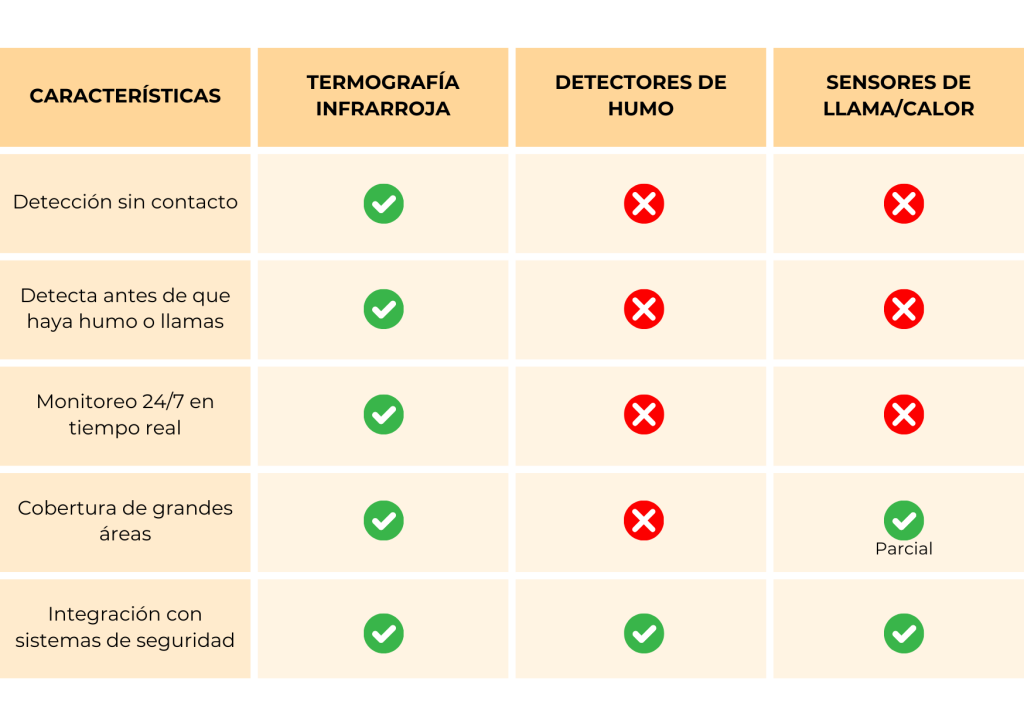
Comparison of fire detection technologies
Regulations and certifications
To ensure safety, early detection systems must comply with international standards:
- NFPA (National Fire Protection Association)Requirements for detection and alarm systems.
- ISO 7240Global standards for fire detection systems.
- EN 54European standard for fire alarms.
Complying with these regulations ensures that systems are effective and reliable.
How to implement an early fire detection system
To install an efficient system, follow these steps:
1. Risk assessmentIdentify areas of greatest danger.
2. Technology selection: Choose sensors or cameras according to the environment.
3. Installation and configurationAdjust detection thresholds and calibrate sensors.
4. Integration with alarm systemsConnect to control panels and extinguishing systems.
5. Monitoring and maintenanceRegular inspections to ensure its operation.
🔹 Approximate cost: Investment varies depending on the system, but ranges from €460. for basic sensors to 46,000 for advanced systems with AI and thermal cameras..
Conclusion
The early detection of fires is key to avoiding disasters. Thanks to technologies such as sensors, thermal cameras and artificial intelligenceit is possible to react before the fire spreads.
Need help implementing a fire detection system?